Categories
Fight Scene Features Health

ENZO CALZAGHE – HEAD, BRAIN INJURIES AND PROTECTION

Head injuries, Brain Injuries and Protection


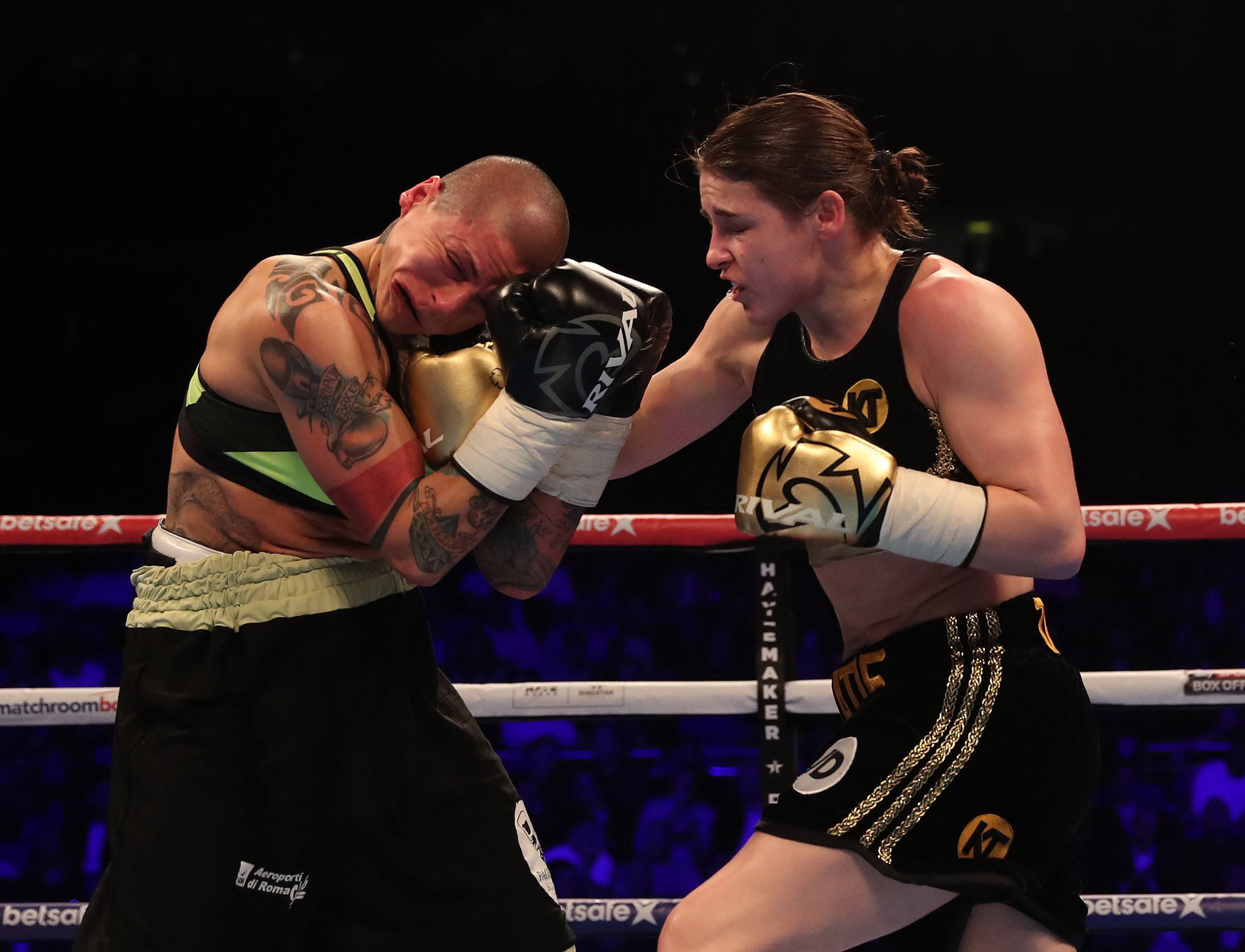
We have seen a few deaths in recent months and the problem I think is that since we have developed punches in bunches and people are starting to use this method, boxing has changed. In the old days it was more like 1, 2 3 or 4 punches the whole round. Now people try to charge and try to get the opponent out in 3 or 4 rounds. They are landing 6 or 7 times in a row, maybe more trying to get rid of the guy straight away and I think this is the reason why it is more dangerous. They will go for the brain, go for the head continuously.


I trained my boxers to hit faster and now the technique punches with bunches has been captured.


You can’t tackle it in that you can’t change the style of boxing, it has gone around the world. We can’t change sport, but there needs to be more protection. Sport can be dangerous and in theory we shouldn’t try throwing shots at the brain.


Boxing is not considered as a normal sport. Punches in bunches is dangerous and unites hitting to the head, the cure could be some type of head protection.


The problem now is that people are dying like flies because the system of boxing has changed, the way to cure it in my opinion is probably with head guards. We don’t want to see fights with headguards but it is a cure, we can’t tell a boxer to throw one punch at a time and be careful with punches, it doesn’t work that way.


Boxing isn’t aimed for the brain, or to cause head injury, but it is happening too often and we need to tackle this. There is a cruelty and honesty in boxing. I don’t believe a fighter wants to go there and literally knock them out.

My advice would be drop them then counter them and call it a day.


How to do this? – talks with the BBBofC and Authorities. We can’t change boxing as it is now. Everyone enjoys the speed of it, the punching of it, they can’t slow this down that wouldn’t be boxing anymore, everything is going faster in all sports. The punches are more powerful.


Categories
Fight Scene Features Sports Equipment

A Boxing Glove Designed for Women

Adidas presents its first boxing gloves designed for women

– adidas speedw200 gloves are moulded specifically for female hands –

– adidas worked with female athletes including World Champions Heather Hardy and Nikki Adler to develop glove –

– Glove designed to give athletes even more speed in the ring –


Herzogenaurach, Germany (August 1, 2016) adidas introduces its first boxing gloves specially designed for the female hand – the adidas speedw200 for women. Whether training or competing in the ring, the speedw200 gloves are designed to optimise the speed and performance of the female boxer.


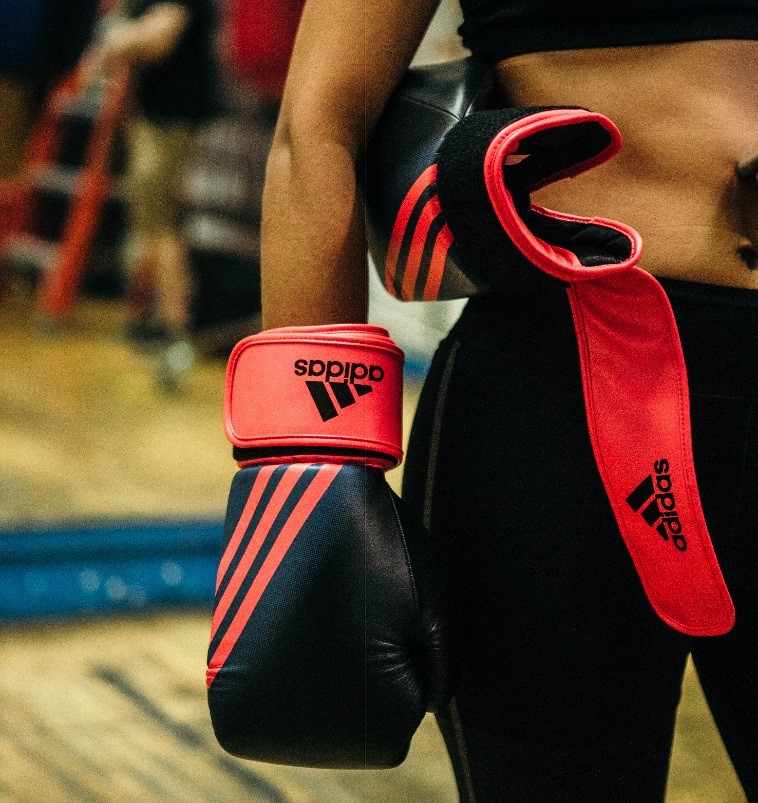
The glove is built using a bespoke one-piece mould modelled specifically to suit female anatomy. The speedw200 glove has a trimmed wrist and lower hand to provide a custom fit for women’s hands and the unique elastic closing system is fastened with a rigid Velcro strap for quick and firm adjustment.


Multi-layered foam padding built inside the glove protects against shock during intense training whilst a longer, thinner and extra-padded thumb gives added protection and comfort for female athletes.


The speedw200 are made of leather in a combination of black, tech ink and shock red colours, with lightweight, yet durable, polyurethane (PU) material used on the palms for additional speed and resilience. A high-end synthetic taffeta lining provides optimised comfort inside the glove.


New York based WBC Super Bantamweight Champion Heather Hardy, who is undefeated as a professional fighter, said: “The introduction of female specific boxing products is a step forward and I’m proud to be associated with the speedw200 gloves and adidas. Our hands are smaller, our wrists are tinier and we are just physically built differently. The adidas speedw200 women’s boxing glove feels really nice to make a fist inside. Structurally it feels good, it is tight on my wrists and I can’t wait to beat up my next opponent wearing it.”


adidas Boxing Director Micheal Arndt said: “At adidas we’re committed to designing merchandise that brings out the very best in our athletes and consumers. We felt it was important to develop a glove specifically for the female hand, which is why we worked closely with our female athletes to make this happen.”


The adidas speedw200 for Women is now available in 6, 8, 10, 12, 14 and 16 oz weights at adidasboxing.com and at specialist retailers, RRP €100. Also available is the speedw100 (RRP €49.95) women’s boxing glove constructed with a polyurethane (PU) outside for maximum durability.


For the latest news follow @adidasboxing on Instagram

Note:

The adidas speedw200 Glove is designed to optimize the speed and performance of movements of the female boxer. Developed by female athletes for female boxers it will be worn by athletes including World Champions Katie Taylor, Nikki Adler and Nicole Wesner.

Categories
Fight Scene Features Health Sports Equipment

SAFETY OF BOXING – A POSITIVE MOVE FORWARD??

The “Infrascanner at Boxing Events – A Positive Move Forward??
By Professor M.R Graham


Traumatic brain injuries (TBI) can be caused by a blow to the head, or sudden motions of the head, as in semi-contact or full contact sport and can result in death (http://www.bbc.co.uk/news/uk-scotland-tayside-central-37552822).

The pathophysiology of TBI varies considerably depending on the location of the injury, within the brain and its severity (Graham et al., 2015).

Severe injuries may lead to intracranial bleeds, large destruction of the brain tissue, and at worst death (Pearn et al., 2016).

The diagnosis of TBI is mainly based on a neurological examination of the patient and additionally using imaging radiology techniques such as computed axial tomography (CAT) or magnetic resonance imaging (MRI).

The Glasgow Coma Scale (GCS) can be used to assess the severity of TBI on the basis of cognitive behaviour (Teasdale and Jennet, 1974; Teasdale et al., 2014). A total score of 13–15 refers to mild TBI (mTBI), 9–12 to moderate TBI, and 3–8 to severe TBI (Faul and Coronado, 2015).

However, neurological examination by GCS has limitations and MRI and CAT scans are enormous pieces of equipment and not portable. Also, one CAT scan is equivalent to the electromagnetic radiation of 400 chest X-Rays. This concentration can be particularly harmful, to the traumatised brain.

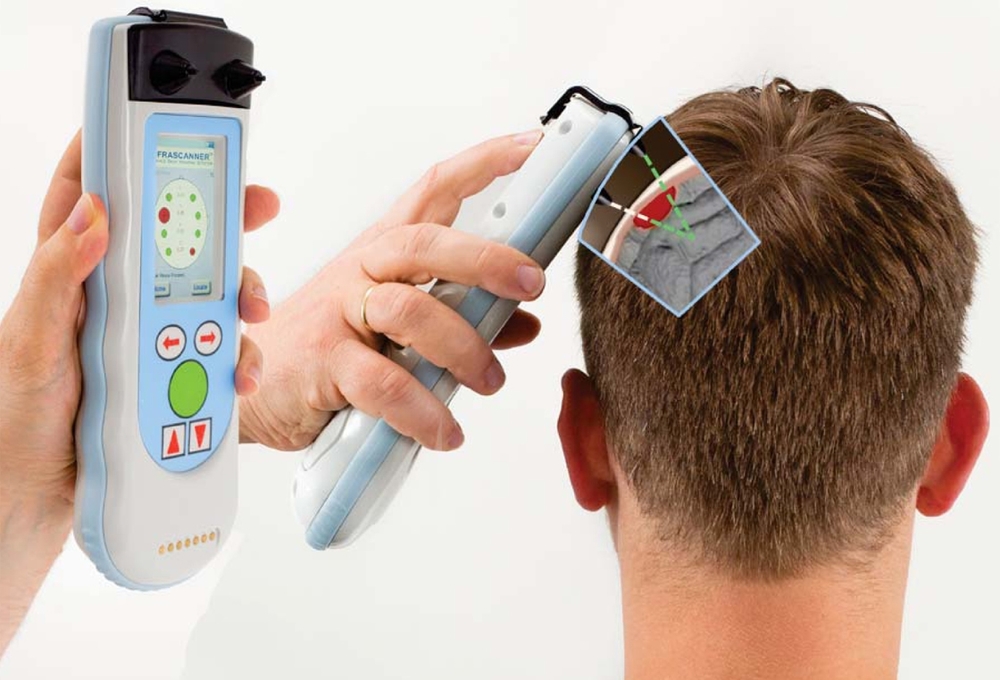
The “Infrascanner” can provide field-based diagnosis and assist in the decision to evacuate an injured athlete to a hospital for immediate investigation and medical or surgical management, if required.

The “Infrascanner” can accurately detect intracranial haematomas using the unique light-absorbing properties of haemoglobin which is located within blood and the non-invasive, non-ionizing nature of Near Infrared (NIR) technology.

Enormous advantages of the “Infrascanner” for speed of diagnosis are:

  • Portability (Weight: 400 grams)
  • Patient measurement is completed within 2-3 minutes;
  • It detects haematomas greater than 3.5 ml in volume;
  • It detects haematomas up to 2.5 cm deep from the surface of the brain (or 3.5 cm from the skin)

Such technologically advanced equipment, could become mandatory in all boxing events, within a very short period.

Failure to have the “Infrascanner” and personnel trained in its use may ultimately invalidate sporting licences and insurances and result in enormous medical negligence claims.

Already in boxing, deaths from intracranial haemorrhages may have been prevented, if the “Infrascanner” had been present and be used as a diagnostic tool (www.infrascanner.com).

Controlled Research Studies have already proven 80-100% sensitivity and 90-100% specificity (Leon-Carrion et al., 2010).

REFERENCES

  1. Faul M, Coronado V. (2015). Epidemiology of traumatic brain injury. Handb Clin Neurol 127:3–13.
  2. Graham MR, Davies B, Cooper SM, Bhattacharya K, Baker JS. (2015). Should an increase in cerebral neurochemicals following head kicks in full contact karate influence return to play. Int J Immunopathol Pharmacol. 28(4): 539-546.
  3. Graham MR, Myers T, Evans P, Davies B, Cooper SM, Bhattacharya K, Grace FM, Baker JS. (2011). Direct hits to the head during amateur boxing is associated with a rise in serum biomarkers for brain injury. Int J Immunopathol Pharmacol. 24(1): 119-125.
  4. Infrascan Handheld Brain Diagnostics. infrascanner.com. Accessed March 7, 2017.
  5. Leon-Carrion J, Dominguez-Roldan J, Leon-Dominguez U, Murillo-Cabezas F. (2010). The Infrascanner, a handheld device for screening in situ for the presence of brain haematomas. Brain Injury. 24(10):1193-1201.
  6. Mike Towell death: Calls for fatal accident inquiry. http://www.bbc.co.uk/news/uk-scotland-tayside-central- 37552822. Accessed April 26, 2017.
  7. Pearn ML, Niesman IR, Egawa J, Sawada A, Almenar-Queralt A, Shah SB, Duckworth JL, Head BP. (2016). Pathophysiology associated with traumatic brain injury: current treatments and potential novel therapeutics. Cell Mol Neurobiol Advance online publication. doi:10.1007/s10571-016-0400-1.
  8. Teasdale G, Jennet B (1974) Assessment of coma and impaired consciousness. A practical scale. Lancet 304:81–84.
  9. Teasdale G, Maas A, Lecky F, Manley G, Stocchetti N, Murray G (2014) The Glasgow Coma Scale at 40 years: standing the test of time. Lancet Neurol 13:844–854.